A Complete Guide to Epoxy Coated Wire Mesh: Types, Applications & Selection Guide
If you're sourcing wire mesh for window screening, security protection, or industrial filtration, you've probably come across epoxy coated wire mesh. And for good reason — epoxy powder coating adds a durable, corrosion-resistant layer that dramatically extends the service life of the base wire, whether it's stainless steel, aluminum, or carbon steel.
But not all epoxy coated mesh is the same. Coating quality, base material selection, and mesh specifications vary widely between suppliers. Choosing wrong can mean peeling coating after one season, rust spots within months, or clogged filter media from loose coating particles.
This guide covers everything you need to know to select the right epoxy coated wire mesh for your application.
What Is Epoxy Coated Wire Mesh?
Epoxy coated wire mesh starts with a woven wire base fabric — stainless steel (304/316), aluminum alloy, or low-carbon steel — which is then coated with electrostatic epoxy powder and cured at high temperature. The result is a smooth, uniform protective layer that bonds tightly to the wire surface.
How It Works
The epoxy powder is electrostatically charged and sprayed onto the wire mesh, where it adheres to the grounded metal surface. The coated mesh then passes through a curing oven at approximately 160°C, where the powder melts, flows, and cross-links into a tough, durable film.
Unlike liquid paint, electrostatic powder coating produces no VOC emissions, delivers uniform coverage without drips or sags, and achieves superior adhesion to the wire surface.
Applicable Standards
| Standard | Region | Scope |
|---|---|---|
| GB/T 18593-2010 | China | Fusion bonded epoxy powder coating for anti-corrosion |
| QB/T 4285-2012 | China | Insect screen (window mesh) specifications |
| GB/T 40405-2021 | China | Building screen doors — technical conditions |
| T/HSSIA 001-2023 | China | Multi-purpose security mesh (Jingang mesh) |
| GB/T 17492-2019 | China / ISO | Industrial woven wire mesh — base mesh standard |
| ASTM B117 | US / International | Salt spray test method for coating evaluation |
Types of Epoxy Coated Wire Mesh
Epoxy coated wire mesh is classified by application into four main product types, each with distinct specifications:
1. Insect Screen (Window Mesh)
The most common type. A fine-mesh woven fabric designed to keep insects out while allowing airflow and visibility. Typically made from aluminum alloy or stainless steel 304 with a thin, even epoxy coating.
Best for: Window screens, door screens, residential ventilation
Typical mesh: 14×14, 16×16, 18×18, 20×20
Typical wire diameter: 0.18mm — 0.30mm
Base materials: Aluminum alloy or SS304
Colors: Black, grey, white, custom RAL
2. Security Screen Mesh
Heavy-duty woven mesh designed for anti-theft protection and physical security. Also known as "Jingang mesh" in the Chinese market. Made from thicker stainless steel wire with reinforced epoxy coating.
Best for: Security doors, anti-theft window screens, ground-floor protection
Typical mesh: 10×10, 11×11, 12×12, 14×14
Typical wire diameter: 0.55mm — 0.90mm
Base materials: SS304 (standard), SS316 (coastal areas)
Key requirement: Tensile strength ≥ 520 MPa per T/HSSIA 001-2023
3. Filter Support Mesh
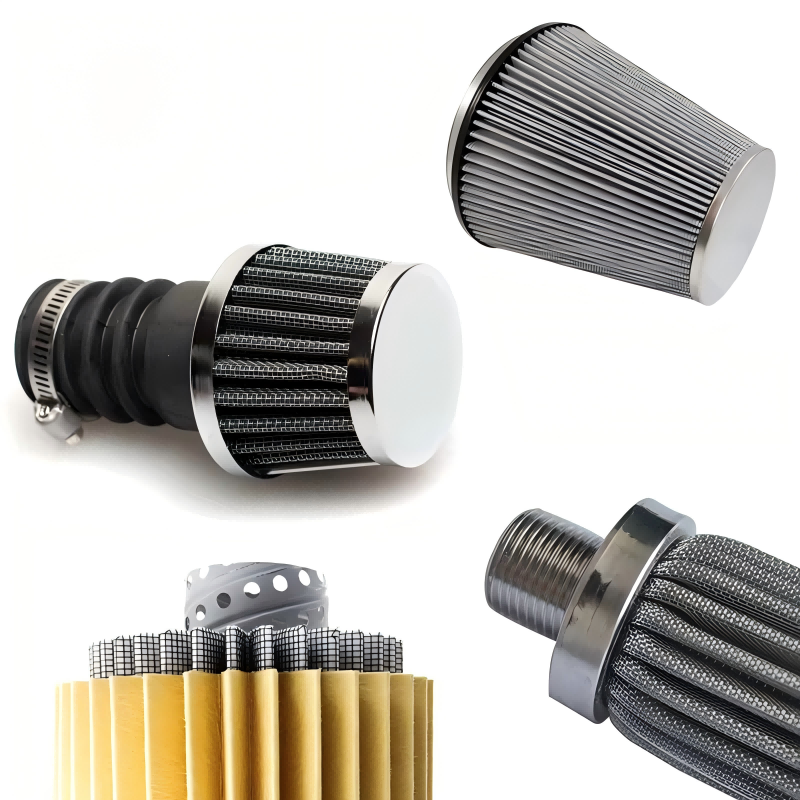
Industrial woven mesh used as support layers in hydraulic, air, and oil filter elements. The epoxy coating provides chemical resistance and prevents corrosion in operating environments.
Best for: Hydraulic filter support, oil filter pleat support, air intake filters
Typical mesh: 8×8 to 30×30
Typical wire diameter: 0.15mm — 0.64mm
Base materials: Low carbon steel or SS304
Coating requirement: Oil-resistant epoxy, smooth surface
4. Decorative / Architectural Mesh
Epoxy coated mesh used in architectural facades, railings, landscape screens, and interior design. The coating provides color options and weather resistance while the woven pattern creates visual appeal.
Best for: Building facades, balcony railings, partition screens, landscaping
Typical mesh: 12×12 to 24×24
Typical wire diameter: 0.20mm — 0.50mm
Base materials: Aluminum alloy or SS304
Colors: Wide range, UV-stabilized epoxy
Base Material Selection
The base wire material determines the mechanical strength, corrosion resistance, and cost of the finished product.
| Material | Corrosion Resistance | Relative Cost | Best For |
|---|---|---|---|
| Low Carbon Steel (Q195) | Low | 1x | General filtration, budget insect screen |
| Stainless Steel 304 | High | 2-3x | Security screen, outdoor insect screen, industrial filter |
| Stainless Steel 316 | Very high (marine) | 3-5x | Coastal screens, chemical filtration |
| Aluminum Alloy (5154A/6063) | Excellent (no rust) | 2-3.5x | Premium insect screen, decorative mesh |
Coating Performance: What to Look For
The epoxy coating is the defining feature of this product line. Here are the key performance indicators:
| Parameter | Value | What It Means |
|---|---|---|
| Coating weight | 20-35 g/m² | Sufficient for fine wire without clogging openings |
| Adhesion | ≥ 0.7 kg at intersections | Coating stays bonded under handling and installation |
| Impact resistance | 1 kg / 50 cm no peeling | Withstands accidental impacts without chipping |
| Flex resistance | 1 mm radius bend no cracking | Mesh can be bent without coating failure |
| Salt spray | 96 h no visible change | Proven corrosion resistance in outdoor environments |
| Working temperature | ≤ 180°C | Suitable for most ambient and moderate-temperature applications |
| Compliance | CE, RoHS, REACH | Meets European safety and environmental standards |
Pro tip: Adhesion is the single most critical quality parameter for epoxy coated mesh. If the adhesion is poor, the coating will peel under tensioning — especially in security screen applications where mesh is stretched tight in frames.
Key Specification Parameters
Mesh Count vs. Opening Size
Measured as the number of openings per linear inch (25.4mm). Standard notation is "warp×weft" — for example, 18×14 means 18 openings per inch in the warp direction and 14 in the weft.
For insect screens, common mesh counts are:
| Mesh Count | Wire Dia (mm) | Aperture (mm) | Typical Application |
|---|---|---|---|
| 14×14 | 0.27 | ~1.55mm | Standard insect screen |
| 16×16 | 0.24 | ~1.35mm | Fine insect screen |
| 18×18 | 0.22 | ~1.19mm | Extra-fine, small insect prevention |
| 20×20 | 0.20 | ~1.07mm | Ultra-fine, pollen/allergen reduction |
Roll Width and Length
| Parameter | Common Range |
|---|---|
| Width | 0.58m, 0.75m, 0.82m, 0.9m, 1.0m, 1.22m, 1.5m |
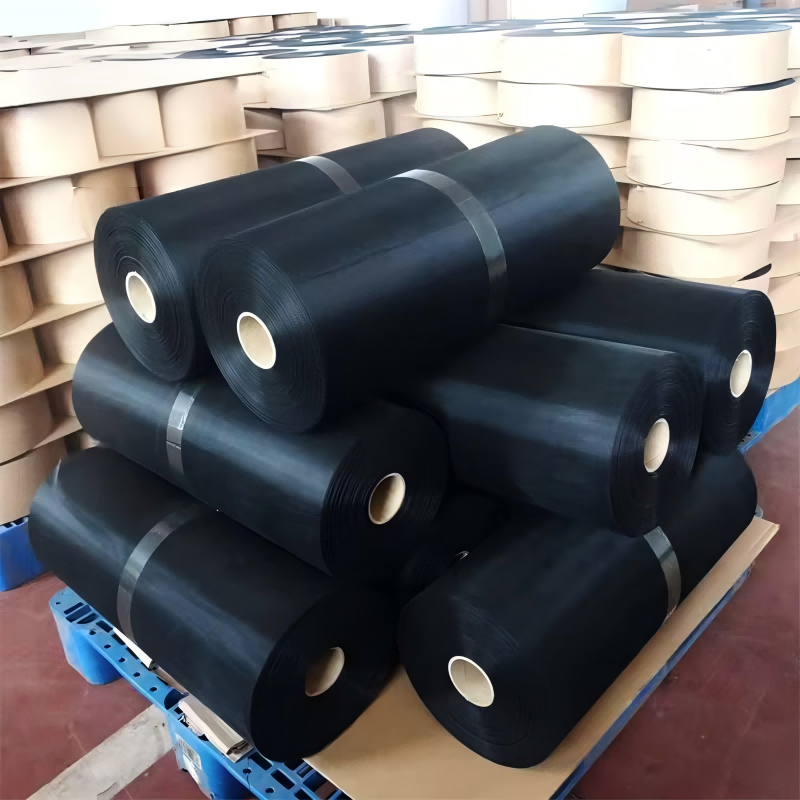
| Length | Custom cut (2m, 2.4m, 3m sheets) or rolls up to 300m |
Applications by Industry
Residential & Commercial Buildings
| Application | Recommended Type | Key Specs |
|---|---|---|
| Window insect screens | Epoxy Insect Screen | 16×16 / 18×18, SS304 or aluminum |
| Security doors (ground floor) | Epoxy Security Screen | 11×11 or 12×12, ≥ 0.55mm wire |
| Balcony railings | Epoxy Decorative Mesh | 12×12 to 20×20, SS304 or aluminum |
Industrial Filtration
| Application | Recommended Type | Key Specs |
|---|---|---|
| Hydraulic filter support | Epoxy Filter Mesh | 10×10 to 30×30, low carbon or SS304 |
| Oil filter pleat support | Epoxy Filter Mesh | 8×8 to 20×20, oil-resistant epoxy |
| Air intake filter support | Epoxy Filter Mesh | 14×14 to 24×24, low carbon steel |
Coastal & Marine Environments
| Application | Recommended Type | Key Specs |
|---|---|---|
| Coastal window screens | Epoxy Insect Screen | SS316 base, 16×16 or 18×18 |
| Marine security screens | Epoxy Security Screen | SS316 base, 12×12, ≥ 0.70mm wire |
How to Select the Right Epoxy Coated Wire Mesh
Step 1: Identify the function
Is this an insect screen, security barrier, filter support, or decorative element? Each has different mechanical and aesthetic requirements.
Step 2: Choose the base material
Aluminum alloy — best for insect screens where weight and rust prevention matter
SS304 — the most versatile, suitable for security screens and outdoor use
SS316 — for coastal or chemically aggressive environments
Low carbon steel — for cost-sensitive filtration applications
Step 3: Determine mesh specification
Match mesh count to the particle or insect size you need to block
Ensure wire diameter is adequate for the required strength
Coating reduces opening size by approximately 2× coating thickness — factor this into aperture calculations
Step 4: Specify coating performance
For outdoor use: confirm salt spray resistance ≥ 96 h
For tensioned screens: confirm adhesion ≥ 0.7 kg
For filtration: confirm oil resistance and smooth surface
For visible applications: confirm color uniformity and UV stability
Step 5: Confirm dimensions and packaging
Roll width matching frame dimensions (minimizes waste)
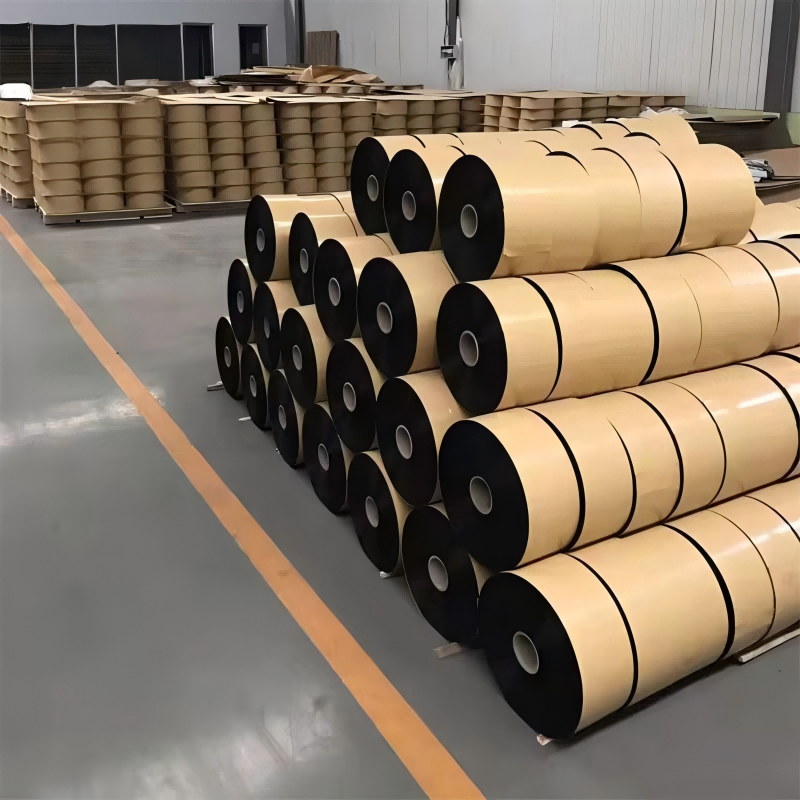
Packaging suitable for export (edge protection, moisture barrier)
Pro tip: Order a coated sample card showing your chosen color on the actual mesh type. Color appearance changes when applied to different mesh densities and wire diameters.
Quality Indicators
| Indicator | Good Quality | Poor Quality |
|---|---|---|
| Coating adhesion | ≥ 0.7 kg, no peeling at intersections | Coating flakes when rubbed or bent |
| Coating uniformity | Smooth, even coverage, no bare spots | Orange peel effect, thin/thick patches |
| Mesh weave | Consistent openings, tight intersections | Irregular gaps, shifted or loose wires |
| Edge finish | Cleanly cut, coating intact at edges | Raw wire exposed at cut edges, rust starting |
| Salt spray test | 96+ h no corrosion (ASTM B117) | Red rust appears before 48 h |
| Color consistency | Uniform shade across entire roll | Visible shade variation within rolls |
Maintenance and Service Life
Epoxy coated wire mesh requires minimal maintenance, but a few practices extend service life:
Insect screens: Clean annually with mild soap and water — avoid abrasive cleaners that can scratch the coating
Security screens: Check coating integrity at frame contact points every 2 years
Filter mesh: Replace during scheduled filter maintenance — coating condition indicates when replacement is needed
Coastal installations: Rinse with fresh water periodically to remove salt deposits
With proper specification and installation, epoxy coated wire mesh in outdoor applications will last 5-10 years (low carbon steel base) or 10-20+ years (SS304/316 base) before coating maintenance is required.
About Hangzhou Vertical Cross Metals Co., Ltd.
At Hangzhou Vertical Cross Metals, we manufacture epoxy coated wire mesh for architectural, security, and industrial applications worldwide. Our epoxy coating line features electrostatic powder spraying with automated cure ovens, ensuring consistent coating quality across every batch.
Our product range includes:
Epoxy Insect Screen — 14×14 to 20×20, aluminum or SS304, for windows and doors
Epoxy Security Screen — 10×10 to 14×14, SS304/316, 0.55-0.90mm wire
Epoxy Filter Mesh — 8×8 to 30×30, carbon steel or SS304, for hydraulic and oil filtration
Epoxy Decorative Mesh — custom weaves and colors for architectural use
All production complies with applicable standards (GB/T 18593, QB/T 4285, T/HSSIA 001) with full material traceability and documented quality control.
Need a custom epoxy mesh specification? Contact us with your application type, required mesh count, base material preference, and dimensions — we'll recommend the right product and provide a factory-direct quote.
First published on — News & Articles