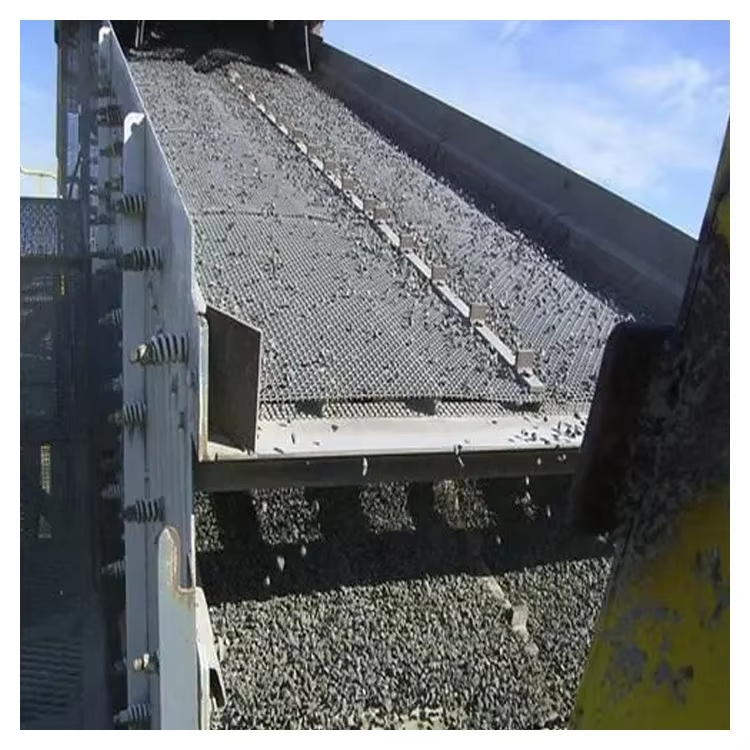
A Complete Guide to 65Mn Mining Screen Mesh: Specifications, Applications & Selection Tips
A Complete Guide to 65Mn Mining Screen Mesh: Specifications, Applications & Selection Tips
If you work in mining, quarrying, or aggregates processing, you already know this: your vibrating screen is only as good as the mesh that does the actual separating work. And if you're looking for a material that balances durability, cost, and performance, 65Mn mining screen mesh is likely the first name that comes up.
But not all 65Mn screens are created equal. Wire diameter, opening size, weaving precision, and even heat treatment vary from supplier to supplier. Choosing the wrong specification means premature blinding, excessive breakage, or — worst case — a full production stop.
This guide covers everything you need to know to make an informed buying decision.
What Is 65Mn Mining Screen Mesh?
65Mn is a high-carbon manganese steel, widely used in China and internationally for mining screen applications. In the Chinese steel grading system, "65" refers to a carbon content of approximately 0.65%, while "Mn" indicates the addition of manganese, which improves hardness and wear resistance.
Compared to plain low-carbon steel (like Q235), 65Mn offers:
Higher tensile strength — resists deformation under heavy impact
Better wear resistance — lasts longer in abrasive environments
Good spring-back property — maintains opening shape even after prolonged vibration
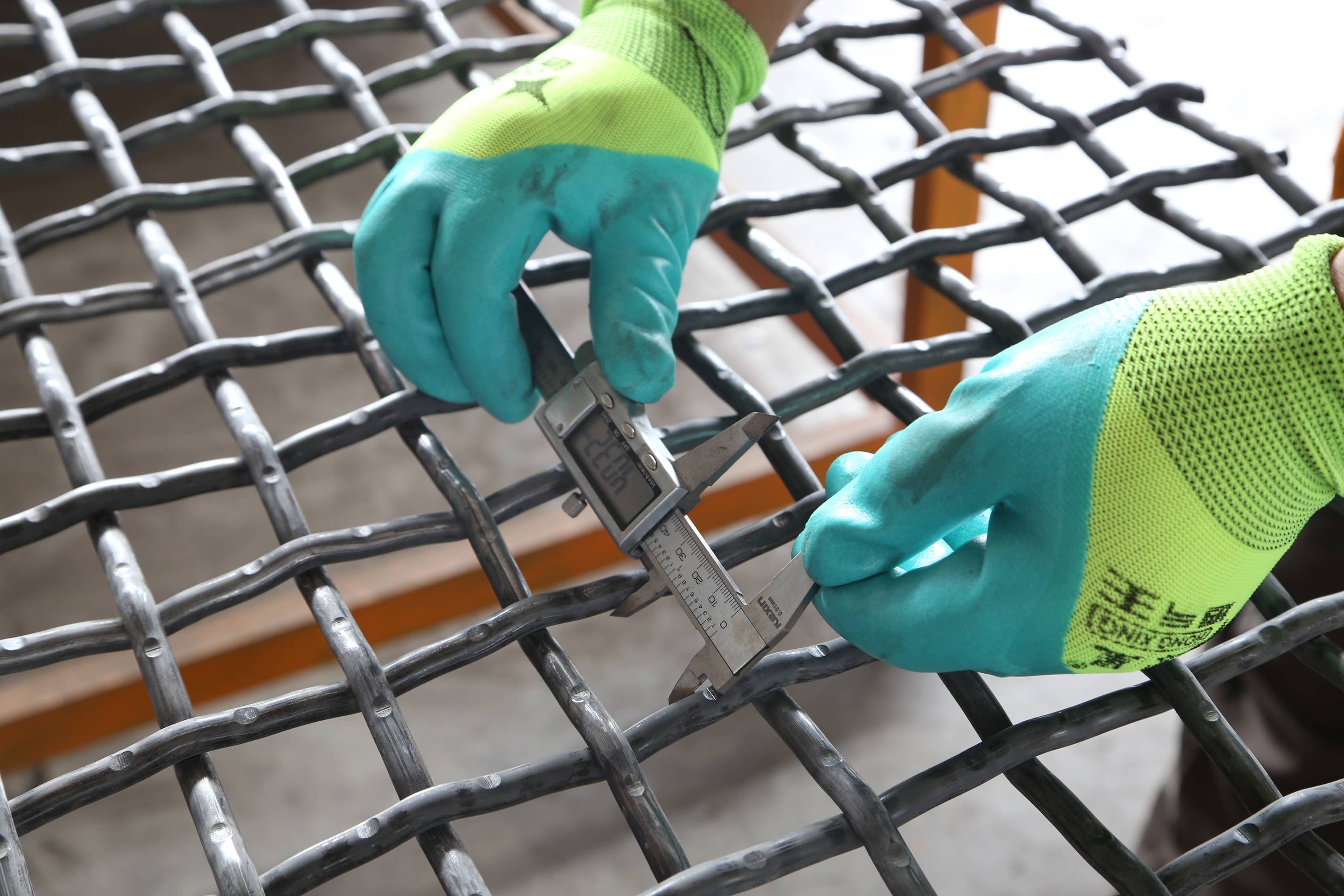
The mesh is woven from drawn 65Mn wire into various patterns, then cut and finished to fit specific vibrating screen models.
Common Weaving Patterns
| Pattern | Description | Best For |
|---|---|---|
| Plain weave | Each wire passes over and under alternately | General screening, medium-sized materials |
| Double crimp | Both warp and weft wires are crimped before weaving | Heavy-duty applications, large stone |
| Flat-top / self-cleaning | Crimped in one direction only, creates a flat surface | Wet or sticky materials that tend to clog |
Key Specifications You Need to Understand
Mesh Count vs. Opening Size
One of the most common sources of confusion — especially for new buyers — is the relationship between mesh count and opening size.
Mesh count = number of openings per linear inch (or per 25.4mm)
Opening size = the actual clear space between wires
These are not the same thing, because opening size depends on both mesh count and wire diameter.
For example, a 10-mesh screen using 2.0mm wire will have smaller openings than a 10-mesh screen using 1.6mm wire — even though both are "10 mesh."
Always specify your required opening size in millimeters, not just mesh count alone.
Wire Diameter
Wire diameter is the single biggest factor affecting screen strength and open area:
Thicker wire → stronger, longer-lasting, but less open area (lower throughput)
Thinner wire → higher throughput, but wears faster and breaks more easily
A good supplier will help you find the sweet spot for your specific material and feed rate.
Open Area Percentage
This is the percentage of the screen surface that is open space. Higher open area means higher capacity, but usually means thinner wires and shorter life. Typical mining screens range from 30% to 60% open area.
65Mn vs. Other Screen Materials
| Material | Tensile Strength | Wear Life | Cost | Best For |
|---|---|---|---|---|
| 65Mn (high-carbon manganese) | ⭐⭐⭐⭐⭐ | ⭐⭐⭐⭐ | Medium | Most mining & quarrying |
| Q235 (low-carbon steel) | ⭐⭐⭐ | ⭐⭐ | Low | Light-duty, temporary use |
| Stainless steel (304/316) | ⭐⭐⭐⭐ | ⭐⭐⭐⭐⭐ | High | Corrosive/wet environments |
| Spring steel (60Si2Mn) | ⭐⭐⭐⭐⭐ | ⭐⭐⭐⭐⭐ | High | Heavy-impact primary screens |
Bottom line: For 90% of mining screening applications, 65Mn offers the best value — it outperforms Q235 significantly without the premium price of stainless or spring steel.
Common Applications
65Mn mining screen mesh is used across a wide range of mineral processing operations:
1. Iron Ore Screening
Material: Iron ore (crushed, various sizes)
Common openings: 6mm – 50mm
Typical wire diameter: 3.0mm – 8.0mm
Note: High impact and abrasion — thicker wire recommended
2. Coal Processing
Material: Raw coal, washed coal
Common openings: 0.5mm – 13mm
Typical wire diameter: 1.2mm – 3.0mm
Note: Wet coal can cause blinding — consider flat-top weave
3. Aggregate & Stone Quarrying
Material: Crushed stone, gravel, sand
Common openings: 3mm – 80mm
Typical wire diameter: 2.0mm – 10.0mm
Note: Multi-deck screens often use different mesh specs per deck
4. Other Minerals
Bauxite, limestone, phosphate, gold ore — the same principles apply, with adjustments for moisture content and abrasiveness
How to Choose the Right Screen Mesh
Follow these steps to avoid costly mistakes:
Step 1: Define your cut point
What particle size do you need to separate? This determines your target opening size.
Step 2: Assess feed characteristics
Material hardness → harder materials need thicker wire
Moisture content → wet/sticky materials need self-cleaning designs
Feed rate → higher throughput may require larger open area
Step 3: Match your screen deck
Vibrating screens come in different models and slot types (wedged, bolted, tensioned). Know your screen deck specifications before ordering.
Step 4: Communicate with your supplier
A good supplier will ask:
What material are you screening?
What is your target mesh size / opening?
What is your current screen's service life?
What model / dimensions do you need?
Pro tip: If you're replacing an existing screen, take clear photos of the edges, hook strips, and any tensioning system. This saves everyone time and prevents dimension mismatches.
Quality Indicators: How to Spot a Well-Made Screen
Not all 65Mn screens are manufactured to the same standard. Here's what to check:
| Indicator | Good Quality | Poor Quality |
|---|---|---|
| Weave uniformity | Consistent openings across the full area | Irregular gaps, shifted wires |
| Wire straightness | Straight, parallel wires | Wavy or bent wires |
| Edge finish | Cleanly cut, no loose ends | Rough edges, sharp burrs |
| Surface appearance | Uniform color, no rust spots | Uneven oxidation, visible oil residue |
| Dimensional accuracy | ±1-2mm on length/width | More than 5mm deviation |
A reputable supplier will have these checked during final inspection — and they should be willing to share inspection photos upon request.
Maintenance Tips to Extend Screen Life
Proper tensioning — Over-tensioning causes premature fatigue; under-tensioning reduces screening efficiency
Regular inspection — Catch small breaks early before they propagate
Match feed to screen area — Overloading reduces both efficiency and life
Rotate screens when possible — Even wear distribution means longer total life
Sourcing 65Mn Mining Screen Mesh: What to Look for in a Supplier
When evaluating screen mesh suppliers, consider:
Material traceability — Do they know the exact steel grade and source?
Manufacturing capability — Do they weave in-house or resell from third parties?
Quality control — What checks are performed before shipping?
Export experience — Do they understand export packaging, documentation, and shipping?
Communication — Do they respond clearly and promptly to technical questions?
This last point matters more than most buyers realize: a supplier who asks questions about your application is usually a supplier who cares about getting it right.
About Hangzhou Vertical Cross Metals Co., Ltd.
At Hangzhou Vertical Cross Metals, we specialize in manufacturing and supplying 65Mn woven wire screen mesh for mining, quarrying, and mineral processing applications worldwide. Every order — from raw material selection to final packaging — goes through our documented quality check process.
We ship from China ports with full export documentation, including commercial invoice, packing list, bill of lading, and certificate of origin as required.
Have a specific screening requirement? Contact us with your material type, target opening size, and screen dimensions — we'll help you find the right specification.
First published on — News & Articles